Posted by HTHQ on 8th Dec 2025
The Daisy Wheel
Understanding the meaning of the daisy wheel on a hot water bottle can be confusing, so we hope our blog makes things clearer and offers some reassurance. It can be misleading reading various articles online and in the press, as not all are accurate and some purport scaremongery amongst consumers; there’s a lot of misinformation out there, which we understand can be concerning, especially when considering a child or elderly person using a hot water bottle.
The daisy wheel on a hot water bottle is the date of manufacture, not an expiry date.
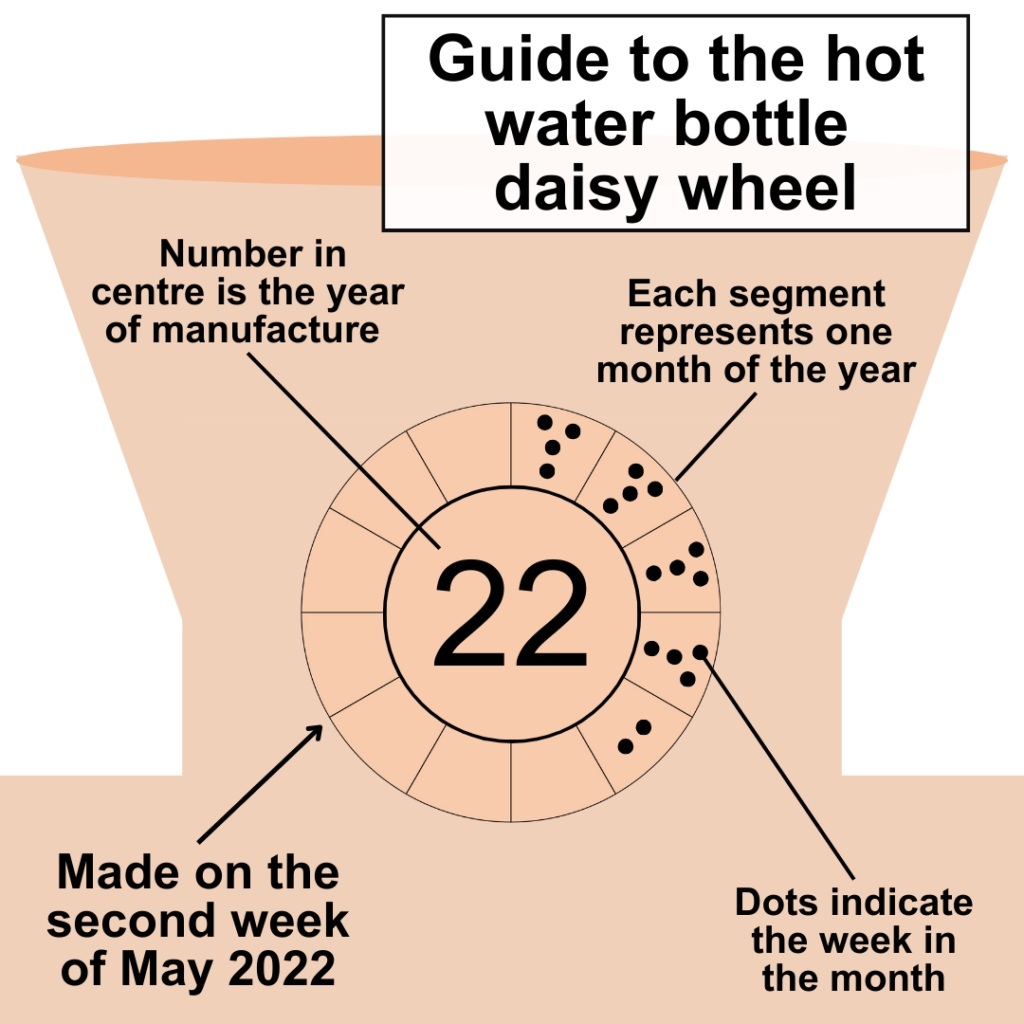
The ‘2-3 year rule’ regarding replacing a hot water bottle within this timeframe applies only AFTER FIRST USE and NOT from the date of manufacture.
A hot water bottle made in 2023, for example, that has never been used should still be safe if it's been stored properly and doesn't show any signs of damage. However, that's not to say that a more recently manufactured bottle has no chance of splitting or leaking, or that any bottle with more than two to three years use will definately be unsafe.
Hot water bottle manufacturers suggest that the manufacturing date isn't relevant and shouldn't be viewed as an expiry date. It’s suggested to go by the date the bottle is first used and always check bottles for visible signs of wear or damage before first use and at regular intervals thereafter.
All our hot water bottles meet British Safety Standard BS1970:2012, and come from trusted manufacturers who also supply to large high street chemists and other major retailers; our stock is replenished regularly, so you can feel completely confident when choosing to purchase a hot water bottle from us.
How long a hot water bottle lasts before needing to be replaced depends on how often you use it and how it's stored. Our hot water bottles are stored in the correct conditions i.e. the environment is dry, not exposed to light or extreme hot and cold temperatures. The fabric coverings and plastic wrapping also provide additional protection against degradation.
The Industry Overview
Lifespan starts at first use: manufacturers state that the daisy wheel shows the date of production, not an expiry date. Because bottles can sit in warehouses or shops for some time before being sold, combined with lengthy delivery times from factory to business, they should still be good to use for at least 2 years from the date of purchase or first use.
Proper storage preserves rubber: industry guidance notes that if a bottle has never been used and has been kept in ideal conditions (cool, dry, dark and away from heat or direct sunlight), the rubber should not have degraded from thermal stress. Under this view, a 3 or 4-year old hot water bottle is safe to use provided it passes a thorough physical inspection first.
Tips for safe use of your hot water bottle
- Before first use: fill with cold water to check for leaks or cracks. If no leaks are present then you can fill the bottle to two thirds capacity with boiled water from a kettle that’s has been allowed to cool (never use boiling water or water from the hot top, as this contains impurities which can compromise the integrity of the rubber).
- After use: empty the bottle and hang it upside-down to drain. Make sure it's totally dry before putting away and store with the stopper removed in a cool, dry, dark place, either upside down or flat. Don't place anything on top of the bottle.
Other articles you may find interesting:
> Hot Water Bottle Do's & Don'ts
> Hot Water Bottle Safety Standards